
Newlogs · 25 October 2026
How to Read a Packaged-Food Label in Two Minutes
Look beyond the front of the pack and compare ingredients, serving size, nutrition information and mandatory declarations.
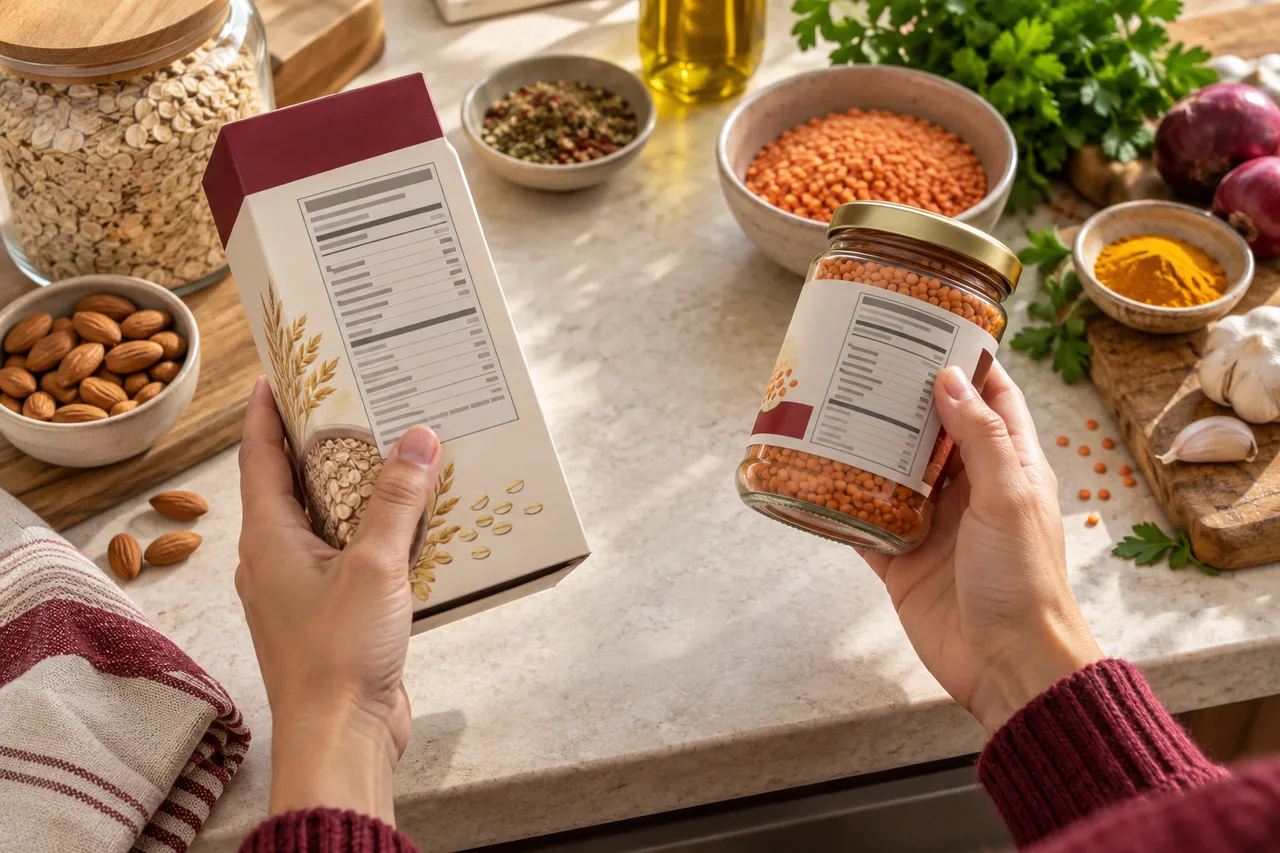
The front of a pack is designed to catch attention. The more useful information is usually on the back or side: the ingredient list, nutrition panel, allergen declaration, net quantity, date marking, storage instructions and the responsible food business details.
Start with the ingredient list. Ingredients are generally presented in descending order by weight, so the first few items tell you what makes up most of the product. Notice added sugars, refined flours, fats and sodium-containing ingredients, but interpret them in the context of the whole food and how often you plan to eat it.
Next, check whether the nutrition values are shown per 100 g, per 100 ml or per serving. A small stated serving can make numbers look lower than the amount actually eaten. Compare like with like, preferably using the per-100-unit column when evaluating two similar products.
Review allergens and dietary marks every time, especially when buying for someone with an allergy or intolerance. Recipes and manufacturing practices can change. Also check that the pack is sealed, within date and stored as instructed.
No single number decides whether a food belongs in your diet. Use labels to compare options and understand portions, not to divide foods into perfect and forbidden categories. Source consulted: Food Safety and Standards Authority of India labelling requirements.