
Healogs · 23 October 2026
Vegetarian Protein on an Indian Plate
Dal, beans, dairy, soy, nuts and grains can work together across the day without turning every meal into a calculation.
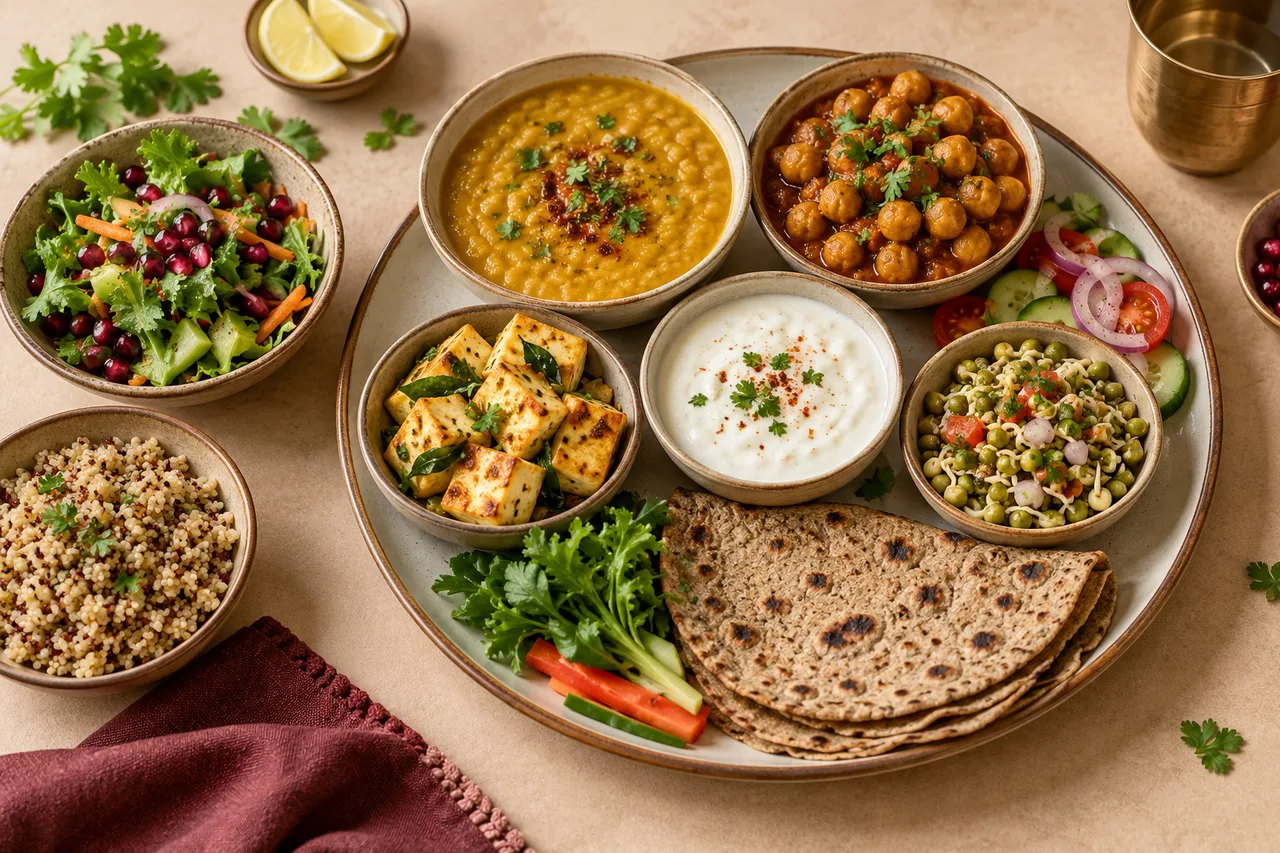
Indian meals already contain many useful vegetarian protein sources: dals, chickpeas, rajma, soy foods, milk, curd, paneer, nuts and seeds. The practical opportunity is often to make one of these foods a visible part of each main meal rather than treating protein as an afterthought.
Different plant foods contribute different amino-acid patterns. You do not need to combine them perfectly in every bite; eating a varied diet across the day is the more useful goal. Familiar pairings such as dal with rice, rajma with grain, or hummus-style chickpeas with roti naturally create variety.
Portion and preparation matter. A thin dal used mainly as gravy supplies less pulse than a thicker serving. Deep-fried paneer and heavily sweetened dairy products may bring more saturated fat or sugar than intended. Choose cooking methods and portions that fit the whole meal.
Protein requirements differ with age, body size, activity, pregnancy and health status. Supplements are not automatically better than food and may be inappropriate for some people.
This is general information rather than a prescription. Anyone with kidney disease, a therapeutic diet or significant digestive symptoms should seek professional guidance. Source consulted: ICMR-NIN Dietary Guidelines for Indians 2024.